Key Takeaways
- OCI = Performance and Parity: Oracle Cloud delivers native compatibility, ensuring minimal re-architecture and maximum ROI.
- Automation Reduces Risk: Tools like ZDM, GoldenGate, and OCI DMS enable faster, zero-downtime migrations.
- Data Governance Is Critical: ITC embeds compliance automation, visibility, and security at every phase.
- Post-Migration Optimization Ensures ROI: Continuous tuning, cost management, and compliance hardening sustain long-term efficiency.
- CSPE Certification Matters: ITC’s Oracle-audited governance framework guarantees operational excellence, SLA performance, and regulatory assurance.
|
As we near the end of 2025, it’s impossible to overlook how enterprises are placing a greater emphasis on their databases, not just as repositories of information, but as the foundation of real-time, AI-enabled business operations. Yet, many of these enterprises still rely on aging on-prem Oracle environments that simply can’t deliver the elasticity, cost-efficiency, or performance required for modern workloads.
According to Gartner, most new Oracle workloads will be deployed on Oracle Cloud Infrastructure (OCI) due to its native compatibility, performance advantages, and lower total cost of ownership.
Migrating Oracle Databases to OCI isn’t simply a move. It’s a modernization strategy. OCI offers enterprises native Oracle feature continuity, end-to-end automation, and deep integration with applications like E-Business Suite (EBS), JD Edwards, and PeopleSoft, making it the most seamless cloud destination for mission-critical Oracle workloads.
Why You Need to Migrate Database from On-Premise to Oracle Cloud Infrastructure
- Performance Meets Cost Efficiency: OCI delivers up to 40% better performance for Oracle databases compared to AWS or Azure equivalents, and up to 80% lower egress costs, according to Oracle’s Cloud Performance Benchmark.
- Native Compatibility and Minimal Re-Architecture: Most on-premises Oracle deployments migrate to OCI without refactoring or re-integration, preserving core business logic while unlocking scalability and automation.
- Built-in Security and Governance: OCI integrates Zero Trust, Data Safe, and Database Vault, ensuring compliance with GDPR, SOX, HIPAA, and new AI-related data protection frameworks introduced in 2025.
- Certified Managed Services Partners Reduce Risk: Gartner emphasizes that working with an Oracle-certified Cloud Solutions Provider Expertise (CSPE) partner “increases migration success rates by 45% and reduces cost overruns by 35%”. IT Convergence, a CSPE-audited partner, brings certified expertise, automation, and SLA-driven governance to deliver first-time-right migrations that scale securely and predictably.
8 Key Challenges in Database Migration to Oracle Cloud and Solutions
Migrating mission-critical Oracle Databases to the cloud remains a complex initiative that blends technology, timing, and trust. While Oracle Cloud Infrastructure (OCI) provides the most native environment for Oracle workloads, migrations can still fail without a structured, governance-driven approach.
Below are the most common migration challenges, and how the right partner helps enterprises overcome them through automation, visibility, and certified expertise.
1. Challenge: Bulk Data Transfer Interruptions
When transferring large datasets over the network, interruptions can stall or corrupt the process. IDC (2025) notes that network instability causes up to 22% of all migration delays in enterprise environments (IDC, 2025). Even with OCI’s high throughput, physical shipment (using Oracle Cloud Infrastructure Data Transfer Appliance) or virtual transfer (via Oracle FastConnect) can be disrupted.
How a Right Partner Resolves it
- Uses redundant data replication and incremental sync checkpoints for resumable transfers.
- Leverages OCI FastConnect for dedicated bandwidth and encrypted connections.
- Automates data integrity validation with checksum-based verification.
- Provides migration timeline governance dashboards with real-time alerts for latency or network degradation.
2. Challenge: Data Synchronization Gaps in Parallel Testing
Enterprises often struggle to keep on-prem and cloud environments synchronized during pilot or parallel runs. Inconsistent replication can cause data drift, especially for high-velocity transactional systems.
How a Right Partner Resolves it
- Implements Oracle GoldenGate for continuous data replication with near-zero latency.
- Performs bi-directional sync testing to validate record consistency.
- Aligns business and IT stakeholders through joint migration playbooks, ensuring parallel testing is built into project SLAs.
3. Challenge: Timeline and Budget Overruns
Database migration projects can expand beyond original scope due to underestimated workloads, data re-engineering needs, or dependency mismanagement.
How a Right Partner Resolves it
- Adopts agile migration sprints with deliverables tied to measurable outcomes.
- Uses cost forecasting and live spend dashboards powered by OCI Cost Analysis tools.
- Provides first-time-right migrations through automated dependency discovery and pre-migration simulation.
- Ensures executive visibility via governance SLAs that include budget and schedule tracking.
4. Challenge: Misaligned Migration Goals
Sometimes the migration strategy selected (rehost, refactor, re-architect, or replace) doesn’t align with actual business outcomes, leading to technical feasibility issues or unmet KPIs.
How a Right Partner Resolves it
- Conducts comprehensive readiness assessments to map workloads to the correct migration pattern.
- Aligns technical design with business KPIs using ITC’s Migration Value Framework (cost, performance, compliance).
- Facilitates executive workshops to ensure stakeholder alignment before final cutover.
5. Challenge: Skills Gaps and Resource Constraints
Database cloud migration demands specialized knowledge of OCI networking, security, and automation, skills that are scarce and costly to acquire internally.
How a Right Partner Resolves it
- Provides Oracle-certified experts with proven OCI and Autonomous Database experience.
- Offers managed migration as a service, reducing internal workload pressure.
- Builds internal capability through joint delivery models, transferring knowledge during the project lifecycle.
6. Challenge: Inadequate Cloud Performance Post-Migration
Once migrated, some databases experience latency or throughput drops due to suboptimal configuration or overlooked performance dependencies.
How a Right Partner Resolves it
- Executes pre-migration performance baselining and OCI workload right-sizing.
- Leverages OCI’s Exadata Database Service and Autonomous Database for optimized I/O throughput.
- Performs performance regression testing under real transaction loads before go-live.
- Includes post-cutover performance optimization within managed service SLAs.
7. Challenge: Vendor or Cloud Provider Limitations
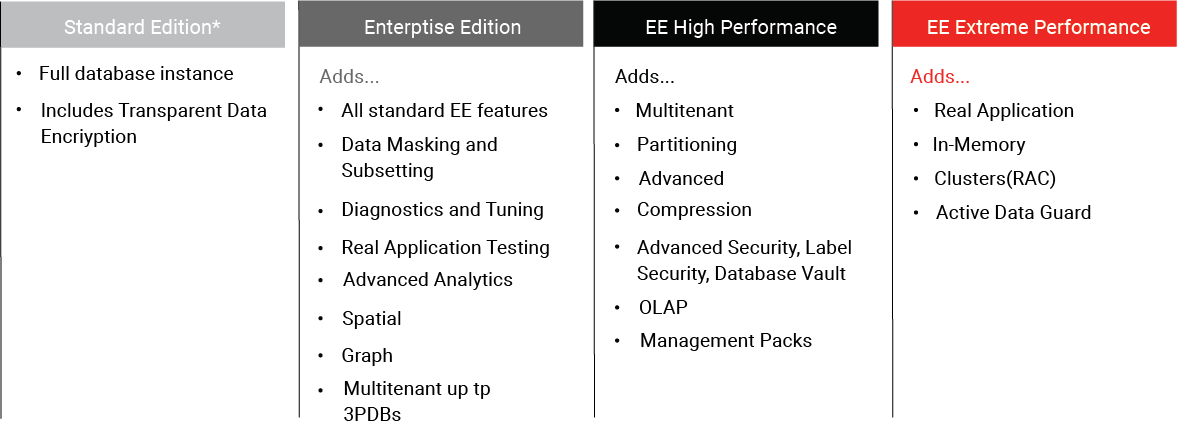
Not all cloud providers can fully support the advanced feature set of Oracle Databases — especially Real Application Clusters (RAC), Data Guard, and Database Vault.
How a Right Partner Resolves it
- Migrates workloads exclusively to OCI’s certified Oracle Database services:
- Exadata Cloud Service
- Autonomous Database
- Oracle Base Database Service
- Ensures full support for Advanced Security, Label Security, RAC, and Data Guard.
- Validates cloud provider compliance with Oracle licensing, performance, and security standards.
8. Challenge: Compliance and Governance Oversight
The most overlooked migration challenge is often the most damaging: failure to maintain continuous compliance. When controls are manually applied or inconsistently enforced, audit gaps and data sovereignty issues emerge.
How a Right Partner Resolves it
- Implements continuous compliance automation across OCI, mapped to standards like GDPR, SOX, PCI DSS, and DORA.
- Provides real-time audit dashboards and digital evidence packs for regulators.
- Aligns migration SLAs with compliance uptime and security incident response metrics.
With these challenges addressed through visibility, automation, and CSPE-certified expertise, organizations can transform migration risk into measurable value.
Database migration to Oracle Cloud is no longer a one-size-fits-all process. Enterprises now have a rich set of Oracle-native tools, automated pathways, and zero-downtime migration options designed to reduce complexity, risk, and cost. The right strategy depends on key variables, such as database size, version, platform architecture (endian format), downtime tolerance, and regulatory requirements.
1. Oracle Data Pump (Logical Migration Method)
Best For: Small to medium databases, same-endian migrations, and environments where schema-level control is required.
Overview: Oracle Data Pump remains one of the most flexible tools for migrating Oracle Databases to OCI. It performs a logical export/import of schemas, tablespaces, or full databases into a dump file that can be securely transferred to OCI storage and re-imported into the target database.
Advantages:
- Broad compatibility across Oracle versions and platforms.
- Supports parallel processing for faster data movement.
- Ideal for migrations where partial data sets or structural transformations are needed.
2. Transportable Tablespaces (TTS) and Full Transportable Database (FTDB)
Best For: Large enterprise databases or migrations between systems with different endian formats.
Overview: Transportable Tablespaces (TTS) and its enhanced version, Full Transportable Database (FTDB), enable faster migrations by copying existing data files directly to the OCI target environment and importing only the metadata.
Advantages:
- Much faster than full exports/imports (data files aren’t unloaded or reloaded).
- Reduces downtime to hours instead of days.
- Retains source database structures and relationships.
3. Oracle Zero Downtime Migration (ZDM)
Best For: Critical production systems that require 24/7 availability.
Overview: Introduced in Oracle Database 19c, Zero Downtime Migration (ZDM) automates the end-to-end migration process using Data Guard replication under the hood. It continuously syncs the source and target databases until final cutover, minimizing downtime to a few minutes.
Advantages:
- Fully automated, Oracle-supported workflow.
- Validates compatibility and performs pre-migration checks.
- Ideal for mission-critical applications like EBS, JDE, or custom ERP systems.
4. Oracle GoldenGate (Continuous Replication and Real-Time Synchronization)
Best For: Large-scale, multi-database environments requiring continuous data synchronization or multi-cloud deployments.
Overview: Oracle GoldenGate enables real-time replication across heterogeneous systems, making it possible to run on-prem and OCI environments in parallel. It captures changes from the source database and applies them to the target with minimal lag.
Advantages:
- Bi-directional replication supports testing and phased migration.
- Enables “blue-green” cutover without downtime.
- Ideal for environments needing validation under live load.
5. Oracle Cloud Infrastructure Database Migration Service (OCI DMS)
Best For: Automated, low-risk migration to OCI Autonomous Database, Exadata Cloud Service, or Base Database Service.
Overview: OCI’s Database Migration Service provides an integrated, fully managed migration experience that automates configuration, validation, and monitoring.
It supports both online and offline migration modes and is designed for minimal manual intervention.
Advantages:
- Centralized dashboard for all migration jobs.
- Integration with OCI Identity and Access Management (IAM) and Security Zones.
- Built-in validation of data integrity and user privileges post-migration.
6. Exadata Cloud Service & Autonomous Database Integration
Best For: Enterprises modernizing high-performance or mission-critical workloads.
Overview: For organizations running high-volume transactional systems or analytics workloads, migrating to OCI Exadata Cloud Service or Autonomous Database ensures top performance, scalability, and operational resilience.
Advantages:
- Exadata Cloud Service delivers on-prem performance with cloud flexibility.
- Autonomous Database offers self-patching, self-tuning, and AI-driven optimization.
- Built-in integration with Oracle Analytics and AI services.
Selecting the Right Database Migration Strategy
| Migration Objective |
Best-Fit Method |
Recommended ITC Service |
Downtime Expectation |
| Minimal downtime for production systems |
Zero Downtime Migration (ZDM) + Data Guard |
Managed Cloud Migration |
Minutes |
| Real-time sync and testing before cutover |
GoldenGate Replication |
Governance-Driven Migration |
Near-zero |
| Large datasets with different endian formats |
Transportable Tablespaces (TTS) |
OCI Migration Factory |
Few hours |
| Small or flexible environments |
Data Pump |
Standard OCI Migration |
Variable |
| Fully managed automation |
OCI Database Migration Service (DMS) |
ITC Automation Framework |
Minimal |
| Performance modernization |
Exadata Cloud Service / Autonomous DB |
Managed Cloud Modernization |
Continuous |
Deployment Options and Post-Migration Optimization
Once migration is complete, the next phase begins: optimizing your Oracle Database environment to fully leverage OCI’s performance, cost efficiency, and governance ecosystem.
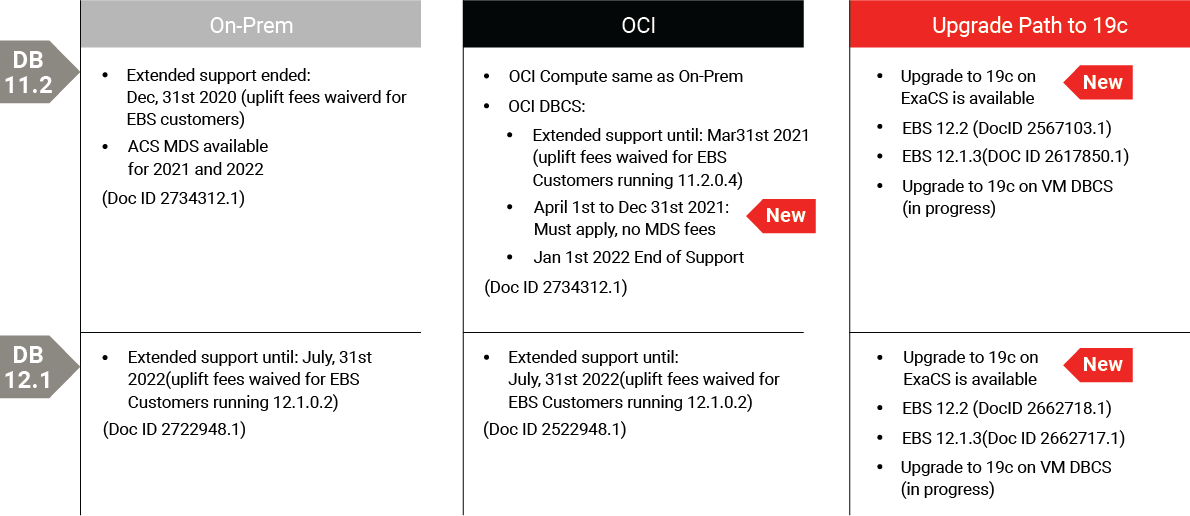
Oracle Cloud Infrastructure now offers multiple deployment and service editions designed to meet varying performance, compliance, and administrative needs. Choosing the right combination, and managing it continuously, is key to realizing long-term ROI.
1. Database Deployment Options
OCI provides flexible database deployment paths depending on business, security, and performance requirements:
| Deployment Type |
Description |
Best Use Cases |
ITC Advantage |
| Autonomous Database |
Fully managed, self-optimizing database that automates tuning, scaling, patching, and security updates. |
Analytics, SaaS, or AI-driven workloads. |
Enables self-healing and AI-driven optimization with zero admin overhead. |
| Exadata Cloud Service |
Delivers Exadata performance with OCI elasticity; ideal for large-scale, mission-critical systems. |
EBS, JDE, financials, and custom OLTP workloads. |
ITC optimizes Exadata configurations with workload profiling and cost modeling. |
| Base Database Service |
IaaS-style managed database that offers fine-grained control over OS and DB parameters. |
Hybrid environments requiring customization. |
Combines flexibility with ITC’s governance dashboards for compliance visibility. |
| VM / Bare Metal DB Systems |
Traditional hosted model with full root and database access. |
Lift-and-shift migrations or regulated industries. |
ITC provides hardening templates and automated patch compliance audits. |
2. Post-Migration Optimization: Building Continuous Efficiency
Migrating the database is only the first step. Optimization ensures sustained performance, compliance, and cost control. IT Convergence implements a three-phase optimization model for all post-migration clients.
Phase 1: Performance Tuning and Workload Balancing
- Continuous performance benchmarking using OCI Operations Insights.
- AI-assisted resource scaling to reduce idle compute waste.
- SQL performance tuning and index optimization via Autonomous Health Framework (AHF).
Phase 2: Security and Compliance Hardening
- Activate Data Safe, Database Vault, and Transparent Data Encryption (TDE).
- Enable automated security patching and quarterly compliance audits.
- Continuous risk scoring aligned with NIST, ISO 27001, and GDPR frameworks.
Phase 3: Cost and Resource Optimization
- Real-time spend monitoring using OCI Cost Analysis and Budgets.
- Auto-scaling policies based on business hours or transaction volume.
- Storage lifecycle automation to archive cold data and lower storage costs.
3. Supporting Oracle E-Business Suite (EBS) and Enterprise Applications
Migrating Oracle Databases often involves critical enterprise systems like EBS, JD Edwards, and PeopleSoft. OCI provides native integration and certified automation tools that streamline these transitions.
4. Continuous Governance: Visibility, Automation, Modernization
Post-migration management must evolve into continuous governance, ensuring the environment remains secure, efficient, and aligned with enterprise strategy.
The Right Continuous Governance Framework integrates:
- Visibility: Unified dashboards for performance, compliance, and cost.
- Automation: AI-based patching, monitoring, and alert management.
- Continuous Compliance: Real-time audit readiness across all workloads.
- Modernization: Integration with OCI AI/ML, analytics, and data services for innovation.
Frequently Asked Questions (FAQs)
- Why migrate Oracle Databases to Oracle Cloud instead of another provider?
OCI offers native feature parity with on-prem Oracle Databases, unmatched performance via Exadata Cloud Service, and built-in compliance automation, advantages AWS and Azure cannot fully replicate.
- How does IT Convergence minimize downtime during migration?
ITC leverages Zero Downtime Migration (ZDM), GoldenGate replication, and Transportable Tablespaces to execute migrations with minimal interruption, even for mission-critical databases.
- What kind of post-migration support does ITC provide?
Through its Managed Cloud Services, ITC offers continuous monitoring, patch automation, cost governance, and compliance validation, ensuring databases remain secure and optimized long after go-live.
- Is migrating to OCI more cost-effective than staying on-premises?
Yes. According to Oracle’s 2025 Cloud Economics Report, organizations migrating to OCI realize up to 40% cost reduction versus on-prem infrastructure, driven by optimized licensing, lower egress fees, and autonomous management.
- Does ITC handle EBS and custom application migrations too?
Absolutely. ITC’s Oracle expertise spans EBS, JD Edwards, PeopleSoft, and custom applications, all supported under end-to-end migration and managed services frameworks validated by Oracle’s CSPE audit program.